Difficult Beauty
Making Art When the World is on Fire

In her poem—“Why Write Love Poetry in a Burning World”—Katie Farris answers her question in two ways:
To train myself to find in the midst of hell
What isn’t hell
. . .
Why write love poetry in a burning world?
To train myself in the midst of a burning world
to offer poems of love to a burning world
I read Katie Farris’ poem over and over when I came across it. Her burning world was the diagnosis and treatment of breast cancer at age 36. Mine is the chaos, cruelty, and suffering I see everywhere I look. Despite our differences, ”Why Write Love Poetry in a Burning World.” contained a truth that I had been searching for. I don’t write love poems - thankfully having given that up in my 20s - but I do struggle to know the place of beauty when contemporary photography seems to trivialize it. And I guess I take the creation of a work of beauty, to connect to Farris’ poem, as an offering of love.
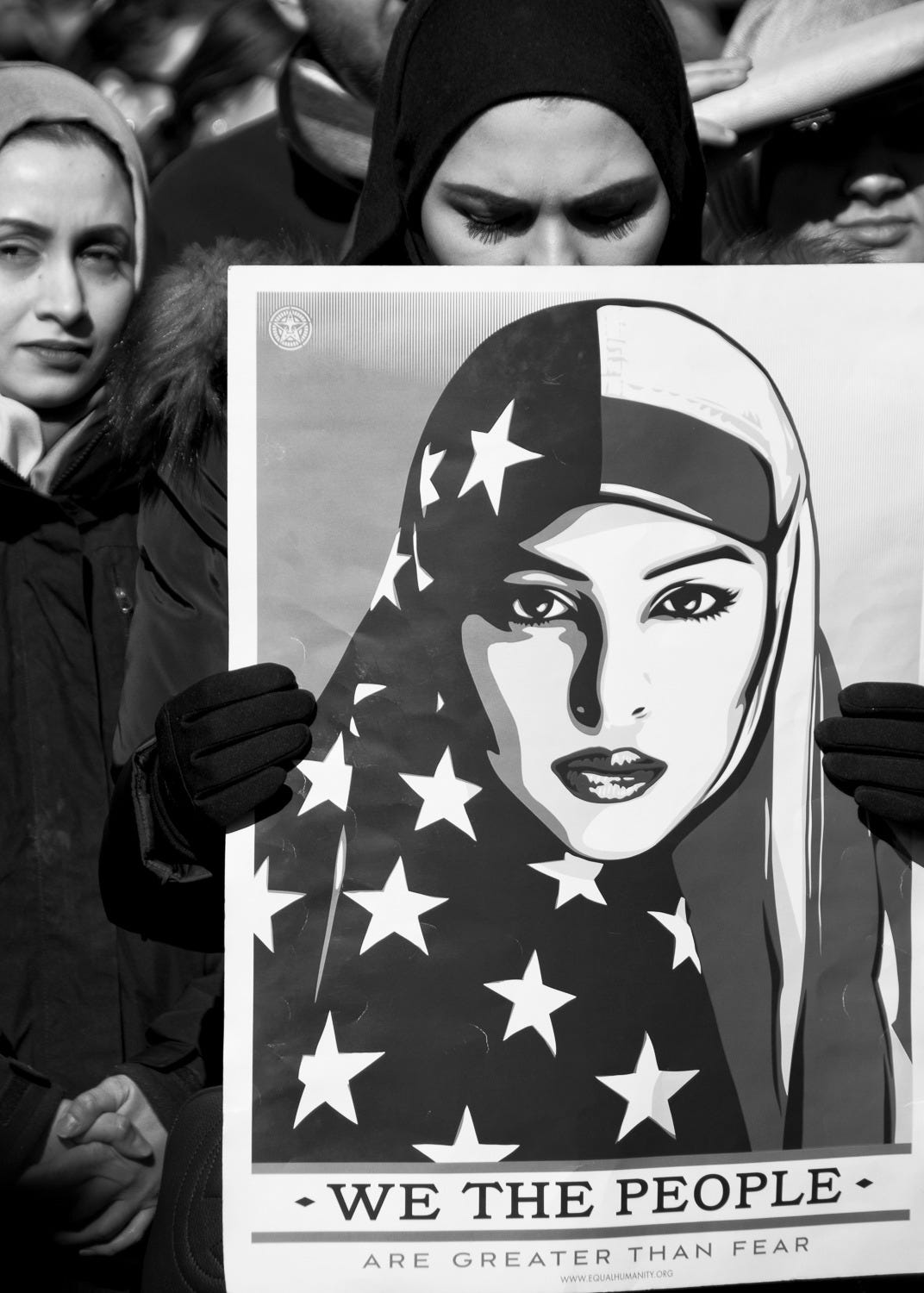
When the world is burning, the temptation is to make photographs of the fire. We see them daily, on our computers, phones, and tablets. On TV and in the newspapers. I even attempted to photograph the fire - at least the kindling - almost 10 years ago when protests erupted in Washington, DC, where I was living at the time. I had been photographing ballet dancers in the studio, but I felt I needed to document the fire that was just beginning to lick at the feet of our world. Photographing ballerinas seemed frivolous in comparison. That tension continues to haunt me.
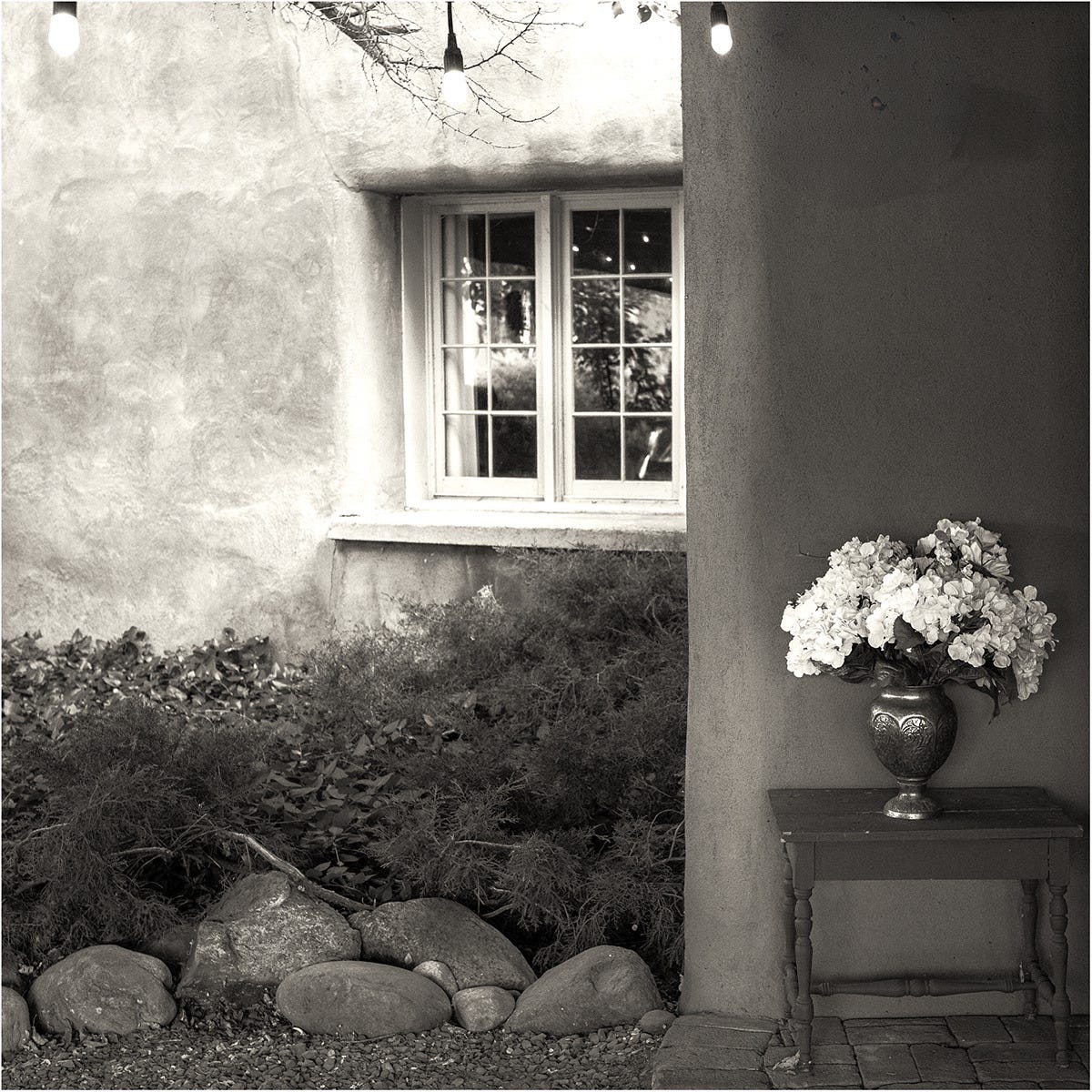
What use is beauty in days like these? Farris offers us two options. The first is a reminder that there are pockets of calm amidst the chaos. I like to think the photo at the beginning of this piece is such an offering. I found this scene in a quiet courtyard off Canyon Road here in Santa Fe. I had been walking through the galleries open for an art night walk on Canon Road, needed to step away from the bustle.
The photographer Robert Adams has written extensively about beauty in photography. For Adams, beauty is important “because it helps us meet our worst fear, the suspicion that life may be chaos and therefore our suffering is without meaning.”
I hope there is something calming about the little courtyard with the bright flowers on the right edge, the clean lines of the window and the adobe. I, at least, can sink into it like a refuge. In hell, we need reminders that all is not hell. This kind of beauty is a testimony that there is meaning and comfort left in the world.
Farris could have left it here. I think she takes beauty—in her case writing poems of love—further with her notion that beauty does not allow us to stand back. She says we can offer poems of love (or make photographs of beauty) to a burning world, rather than set them in opposition to the fire. I see this as an act of spiritual courage. Some have called it a “difficult beauty.” For me, difficult beauty asks that we look at the world on fire without hatred. My Buddhist teachers ask me to bring compassion to the burning world, and I try. But it is too difficult for me. As an artist, the best I can do is to try to see the chaos and those who create it without hatred. Perhaps the best we can do is stand close to the suffering of the world and see the truth of it. The difficult beauty. It’s a counterintuitive name, I think, because most often calling something beautiful implies that we like it. Difficult beauty finds its value in a truth, and not in a refuge or an entertainment or a decoration. We’ve left Hallmark card territory far behind here.
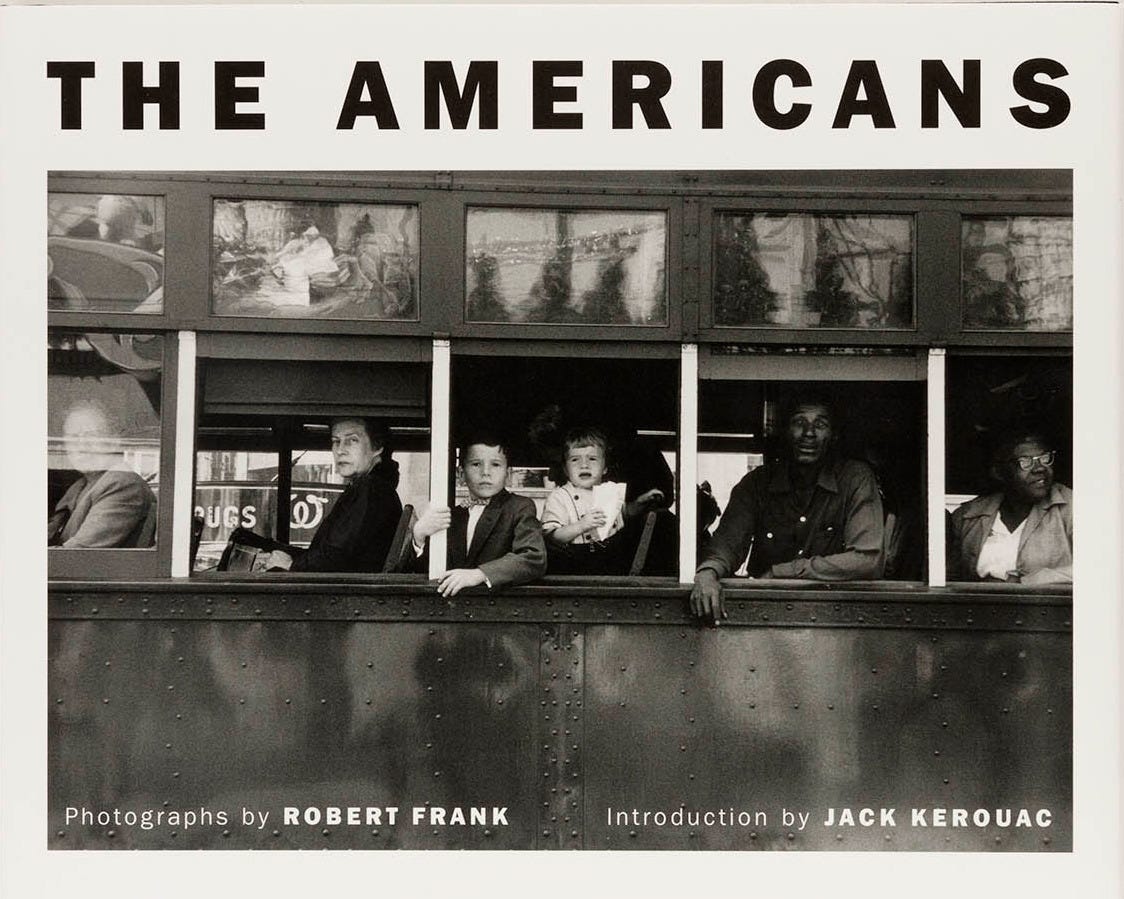
How do we portray difficult beauty in photographs? It’s a worthwhile but hard question. I’m not sure I’ve ever been able to accomplish it, frankly. All I can do is point to others’ work. Sebastião Salgado’s photographs of famine, refugees, war come to mind. Salgado creates photographs with strong aesthetic form that make us look at the difficult truths they portray, and make it hard to look away. Robert Frank’s unflinching look at the reality of America in the ‘50s is another example. Frank’s 1959 book, The Americans, has a beauty to it. But it is the beauty of a truth observed, not the beauty of comfort. The cover photograph of The Americans is a powerful example. Black people are seated in the back, white in front on the trolley. The facial expressions of all the passengers—each isolated in their own window—suggest alienation, disconnection. Robert Adams would find beauty in the form of this photograph. The windows spread across the frame, isolating the faces of those looking out. And while the passengers look toward us, they offer little connection. In a quiet and elegant way, Frank shows us the difficult beauty of America in the 1950s.
As photographers, our job is to see both beauties in the world, reminding ourselves, as Katie Farris does in her courageous poem, of what in the midst of hell isn’t hell, while standing close to the more difficult beauty we also find before us.

If you want to read Katie Farris’ entire poem—Why Write Love Poetry in a Burning World—you can find it here. It is well worth reading.
Bravo.
One of your greatest writings …fantastic