Winter Wheat
The seasons of making art

April 2026 marked the 10th year that I have been writing about photography. I don’t write about film and lenses and cameras (don’t ask me what camera you should buy for your nephew); rather, I write about what photography teaches us about our world and about ourselves. In early 2016, I sent Tim Anderson, Editor and Publisher of Shadow & Light Magazine, some of my work, and he published it. Since then, Tim’s magazine became the primary home for my writing. Both an editorial relationship and a friendship were born.
I celebrated those 10 years in a recent issue of Shadow & Light Magazine (May/June 2026) by revisiting five of my favorite essays, posting one photograph and some text from each. I want to recreate that here. So, I’ll post a photo and some text from a past column to give you a taste of what I’ve been up to over the past 10 years. If you’re intrigued by what you see and would like to read the whole essay, send me a message, and I’ll send you a PDF copy. And I would certainly encourage you to subscribe to Shadow & Light Magazine. Tim puts together a wonderful journal.
“Winter” initially appeared in Issue #58 of Shadow & Light Magazine, March/April 2024. This essay isn’t about the yearly season, however. It’s a reflection on the interior, creative winters we experience as artists, and how those periods of apparent stagnation are a necessary part of the creative process.
Winter
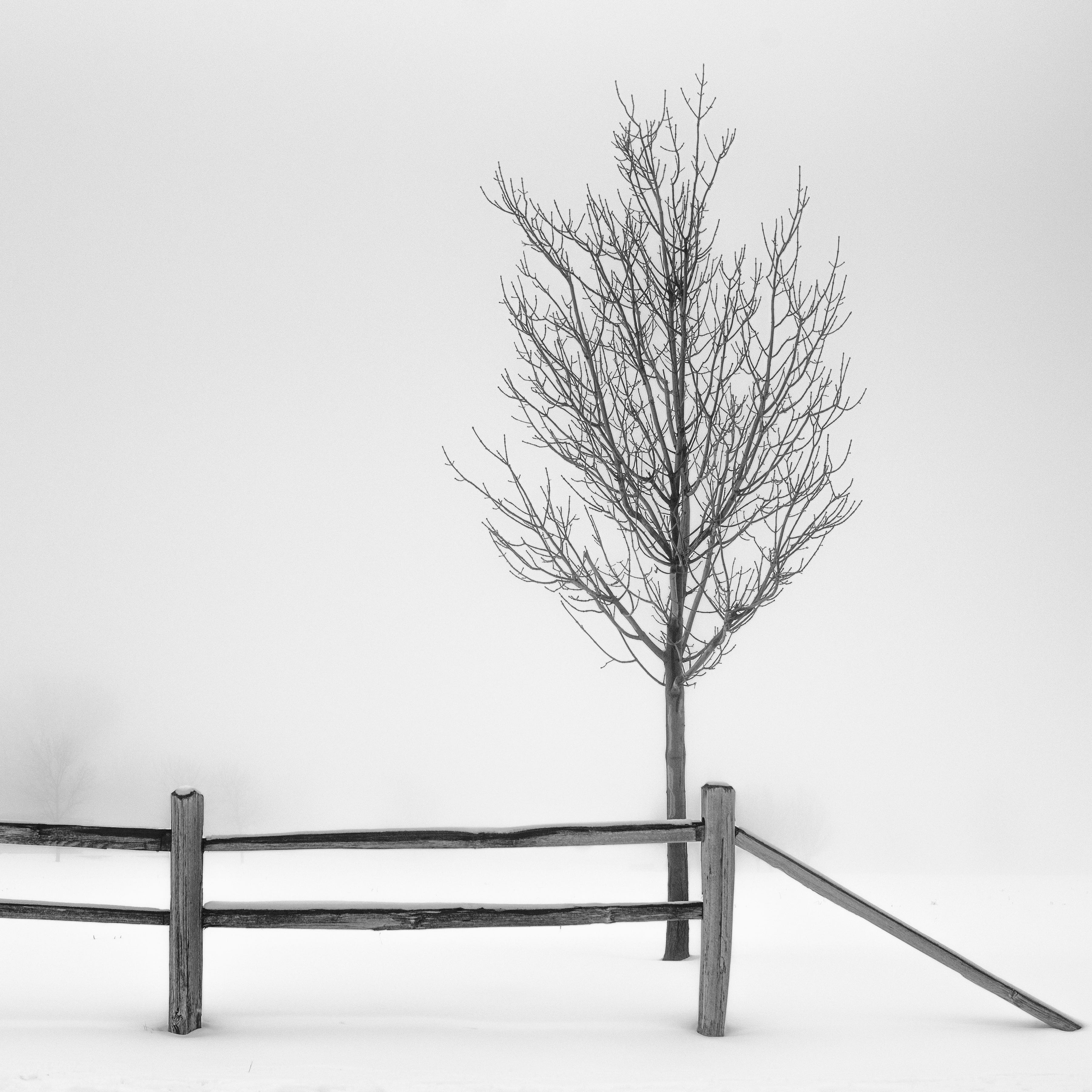
Many kinds of winter come into a life; some exterior, some interior. The season itself finds us yearly as the autumn sun sinks daily toward the south. There is the winter of grief. The winter of solitude, and sometimes loneliness. And the snowbound days when we give up all we have planned to play cards by the fire. Right now, I find myself in a different kind of winter — the winter when creativity and the motivation to do work have faded.
It doesn’t help that it is actually winter here in the high desert of New Mexico where I live. Clouds have blocked the usually deep blue sky for more days than usual this year. The temperatures have been colder. I should go out to make photographs, I know.
“But the light is terrible,” I say, surveying the dull gray cloud cover. “It’s too cold, and the wind. What if the tripod blows over? I can’t do anything good in this weather.”
I remind myself that some of my favorite photographs have been made in light exactly like this, and that my tripod has never blown over. Yet inertia remains.
I don’t have a cure for a period of creative winter. I know we all experience it — except, of course, the friend who proudly proclaims that he is never at a loss to make photographs. But are they good photographs, I wonder silently, the tug of envy souring my mood. I see so many articles on the general theme of “Seven ways to get out of a creative slump.” Ever hopeful, I try them. Some even make sense. Don’t wait for inspiration. Do the work. It isn’t bad advice, but even when I force myself to venture into the world with my camera, what I come home with usually doesn’t please. I set my camera aside for a day, a week, sometimes a month, or more.
When I lived in Kansas years ago, it seemed odd to see farmers in their fields in the late fall, planting a crop of wheat soon after the harvest. Winter wheat, they call it. Planted in the fall, winter wheat grows through the winter and is harvested in early summer or turned back into the soil in spring to enrich the earth for the next crop. The growth of winter wheat depends on a period of cold weather and, hopefully, the protection of snow on the ground. The seeds germinate soon after being planted, then suspend growth during the coldest weeks, only to resume growth as the weather warms. When harvested, winter wheat is higher in gluten and is ground into flour used to make yeast breads. The cold and snow and dormant weeks are all part of its cycle. Without them, the plants don’t produce seed, and may not survive.

If you’d like a copy of the entire essay, message me, and I’ll send you a free PDF copy.